
Braindom: Brain Games Test
Lahana Game StudioPuzzle
4.617.28K Reviews
- Version
- 2.7.4
- Installs
- 100.00M
- Age Rating
- Everyone
Screenshots
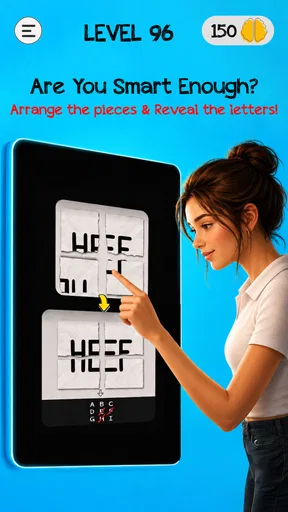
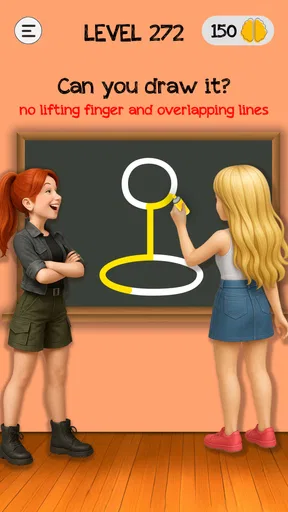
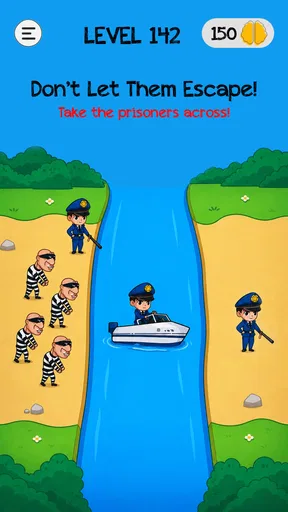
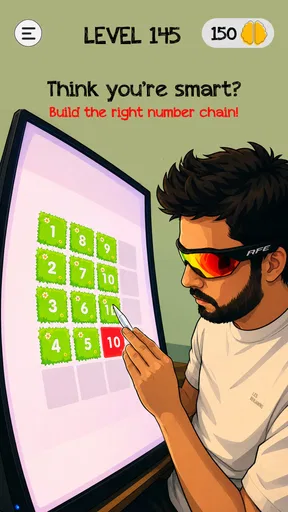
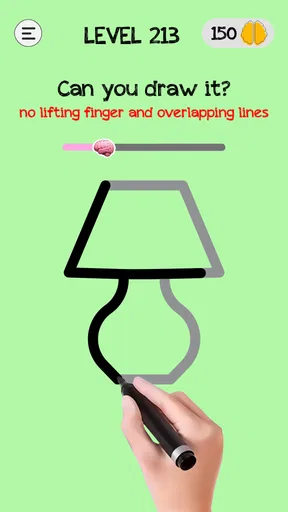
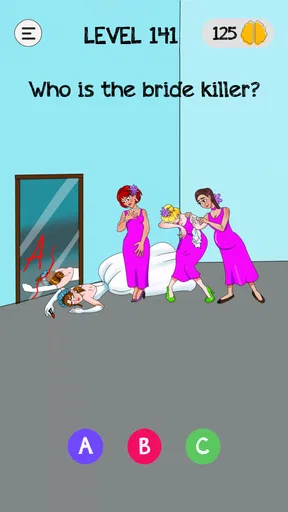
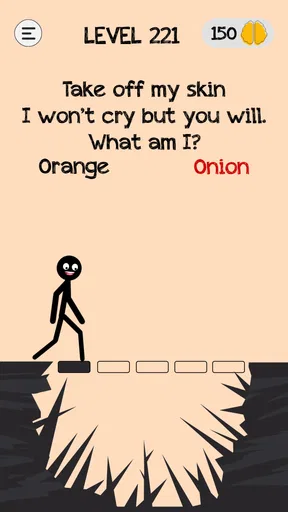
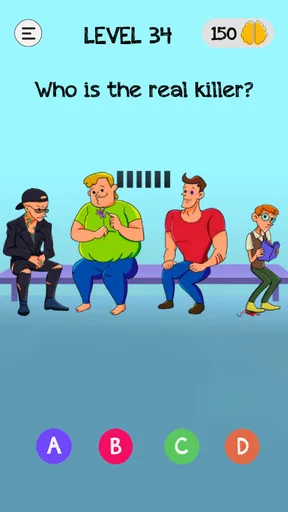
Our Review of Braindom: Brain Games Test
 Analysis by Appyee
My first impression of Braindom: Brain Games Test was that it wants to make puzzle solving feel playful rather than academic. It is a free puzzle game from Lahana Game Studio, built around short brain teasers, visual challenges, riddles, and questions that often ask me to look at a situation from an unexpected angle. The presentation is light and approachable, but the better moments are not completely effortless: I still have to slow down, question the obvious answer, and sometimes interact with the scene in a way I would not initially expect.
That combination explains why it works well as a quick break. I can open it when I have a few spare minutes, solve a handful of challenges, and put it away without needing to remember a complicated story or manage a large game world. At the same time, it is not simply a collection of conventional multiple-choice questions. Its appeal comes from the small surprises hidden in ordinary-looking scenes, where the wording, objects, and character reactions can all matter.
The game has reached a very large audience, with over 100 million installs and an average rating of 4.6 from around 2.2 million ratings. Those figures suggest that its central idea is easy to understand, and my experience supports that: I did not need a tutorial-heavy introduction before I could start testing answers. It is free to download, rated for Everyone, and the current version is 2.7.4, with Android support beginning at version 8.1.
How the visual language turns simple scenes into puzzles
The art direction is one of the most important parts of the experience because the puzzles depend on quick visual reading. Scenes are drawn in a clean, colorful, cartoon-like style, with characters and objects separated clearly enough that I can scan the screen without feeling lost. That simplicity is useful rather than decorative. When a level asks me to notice something unusual, the uncluttered presentation gives the important detail a chance to stand out.
I also like the way the game uses familiar situations as a starting point. A scene can look like a small domestic problem, a social interaction, or a visual riddle, yet the intended solution may depend on a detail that is easy to ignore. This creates a pleasant tension between what the image appears to say and what the puzzle actually expects. I learned to inspect the whole screen instead of focusing only on the central character or the most obvious object.
The setting is not a large explorable world, and that is worth understanding before installing it. There is no need to follow a deep narrative or memorize a map. The “world” is really a sequence of illustrated situations, each designed to establish a context quickly and then challenge my assumptions. That makes the game accessible, but it also means the emotional range is narrower than in a story-driven puzzle adventure.
Characters are mainly there to support the puzzle idea. Their expressions, positions, and relationships help communicate what is happening, while the objects around them often provide the actual clue. I found that this visual language rewards observation more than speed. If I rushed through a scene, I was more likely to miss the small inconsistency that made the solution work.
A useful habit is to read the prompt twice, but in different ways. First, I read it for the ordinary meaning. Then I look for a word that could be interpreted literally, a detail that contradicts the scene, or an action that the question quietly invites. This is especially helpful when a level seems too easy. In this game, an obvious answer is often a signal to inspect the picture again rather than submit immediately.
The bright presentation also keeps failure from feeling severe. When I chose incorrectly, the result felt more like a nudge to rethink the scene than a serious penalty. That tone matters for younger players and casual users, especially because the game is suitable for Everyone. Still, adults who prefer restrained or realistic visual design may find the cartoon look a little repetitive over longer sessions.
Small details matter more than visual complexity
One of the less obvious strengths is how the artwork supports lateral thinking without requiring complicated graphics. A puzzle does not need a detailed environment to become difficult; it only needs the right object in the right place, or a question that makes me reinterpret what I am seeing. For that reason, I recommend treating every visible element as potentially relevant, even when it looks like background decoration.
That approach also reveals a limitation. Once I understood the general style of the game, some challenges became easier to predict. I began expecting a trick whenever a scene looked straightforward. The surprise is strongest when the visual clue feels fair but not immediately obvious; when the answer depends too heavily on guessing the designer’s intention, the satisfaction drops.
Compared with traditional crossword or Sudoku apps, this game is more visual and more dependent on interpretation. Compared with a pure trivia title, it asks less about stored knowledge and more about noticing relationships on the screen. A dedicated logic app may offer deeper, more systematic problem solving, while this one is better at delivering compact moments of surprise through illustrated scenes.
Sound, pacing, and the feel of a quick session
The sound design supports the game’s casual mood rather than trying to create a dramatic atmosphere. Audio cues help mark actions and results, but the main rhythm comes from the short challenge structure: read the prompt, inspect the scene, try an answer, and move on. That loop makes the game easy to fit into a commute, a waiting room, or a short rest between tasks.
I found the pacing most comfortable when I played in small groups of levels. The game encourages curiosity, but the repeated format can become mentally tiring if I try to push through too many puzzles at once. After a while, I stopped examining each scene carefully and started guessing based on patterns. Taking a break improved my accuracy because the puzzles work best when I am attentive rather than merely tapping through them.
This is an important distinction from slower puzzle games. A traditional logic title may ask me to build a chain of deductions over several minutes, while these challenges usually aim for a quicker burst of recognition. The reward is immediate and accessible, but the trade-off is that the experience may not provide the same depth as a carefully structured logic grid, a word puzzle with layered clues, or a physics puzzle built around experimentation.
For an everyday example, I can imagine opening it while waiting for a friend who is running late. I might solve a few scenes, stop when the conversation begins, and return later without feeling that I have abandoned a larger mission. That flexibility is one of its strongest practical qualities. It does not demand a long uninterrupted session, and the individual challenges are easy to understand when I come back.
The same short-form design can be less satisfying if I am looking for a substantial evening game. There is no replacement here for a rich adventure, a competitive brain-training routine, or a puzzle campaign with a strong sense of progression. The mood is intentionally breezy. I would choose it for quick mental stimulation, not for a complex long-term hobby.
How to keep the rhythm enjoyable
My best method is to give each puzzle a deliberate first look, then try one unusual interaction before using help or moving on. I also avoid playing while distracted by notifications, because the difference between a clever solution and a frustrating guess is often a single visual detail. If I am solving quickly but remembering nothing, that is usually a sign that I should pause rather than continue.
Players who prefer sound off can still understand the core experience because the puzzles are visually communicated. On the other hand, keeping audio enabled can make successful actions feel more distinct and gives the short sessions a clearer rhythm. I would not describe the sound as the main reason to play, but it contributes to the friendly, low-pressure tone.
Why the mechanics fit the visual mood
The central mechanic is simple: I study a scene or question, decide what the game is really asking, and interact with the answer. The challenge lies less in complicated controls than in interpreting intent. That is a good match for the art direction because the screen remains readable while my attention moves between text, characters, and objects.
The game is at its best when the solution feels like a small discovery. I may initially assume that the answer is directly stated, then notice that the wording is playing with my expectations. In other moments, the correct move depends on examining the visual arrangement rather than trusting the first narrative I formed. These are satisfying because they reward a change in perspective, not just quick memory.
A second useful insight is that I should separate “what is happening” from “what the question wants.” The scene may suggest a story, but the task can focus on a tiny practical detail inside it. I became more successful when I stopped trying to explain the entire picture and instead identified the exact action or object connected to the prompt.
There is also a trade-off in this design. Because the game relies on surprise and interpretation, not every solution will feel equally logical to every player. Some people enjoy that looseness; others may prefer rules that can be applied consistently from one level to the next. If you dislike puzzles that occasionally require experimentation with the interface or a second reading of the wording, a more formal logic game may be a better fit.
The free entry point makes it easy to test that preference. There are in-app purchases ranging from $1.49 to $6.99 per item, so I would approach the optional spending with a simple rule: only use it when I genuinely want assistance or extra convenience, not because I have stopped engaging with the puzzle itself. The game is most rewarding when I first give the challenge a fair attempt.
Another practical point is device compatibility. Since it supports Android 8.1 and later, it should suit many older devices that cannot run newer games, although the exact feel will still depend on the phone or tablet. The clean visuals are an advantage here because the presentation does not need the scale or visual complexity of a large action game.
Who will enjoy the challenge, and who may not
I would recommend it to casual puzzle players, families looking for approachable brain teasers, and anyone who enjoys riddles built around images. It is also a good choice for people who want a game that can be played in brief sessions without a complicated setup. The Everyone rating reinforces that broad accessibility, though younger players may still benefit from an adult helping with wording or with puzzles that depend on abstract interpretation.
I would be more cautious about recommending it to players seeking rigorous mental training. Solving these challenges can encourage observation and flexible thinking, but it is not the same as following a structured curriculum or measuring improvement in a specific cognitive skill. Likewise, players who want a strong story, detailed character development, or a persistent world should look toward an adventure or narrative puzzle game instead.
It may also frustrate people who want every answer to be deducible through strict logic. The game’s charm comes partly from playful misdirection, and that means personal reactions will vary. I enjoyed the moments when the trick was visible in hindsight, but I was less impressed when I felt I was guessing what the designer considered clever rather than solving a clearly defined system.
My verdict on the overall atmosphere
Braindom: Brain Games Test creates a coherent mood by keeping its art friendly, its scenes readable, and its challenges short enough to feel inviting. The visual style does not overwhelm the mechanics; it gives them a stage. Sound and pacing then reinforce the same idea, making each puzzle feel like a small event rather than part of a demanding campaign.
Its strongest quality is the way it turns ordinary illustrated moments into invitations to look again. I found myself becoming more careful with wording, more alert to background objects, and less willing to accept the first answer that came to mind. Those are concrete habits that make the game more enjoyable, especially when I treat each level as an observation exercise instead of a race.
Its main weakness is also connected to that formula. The experience can feel repetitive over long sessions, and the freedom of interpretation means that some solutions may seem less satisfying than others. The game offers variety in its situations, but not the deep mechanical development found in more specialized puzzle alternatives. I would keep it installed as a compact diversion, not as my only puzzle game.
With a 4.6 average and more than 17 thousand written reviews, it is clear that the format has connected with a broad audience. The large install base is understandable because the game is free, approachable, and easy to sample. Still, popularity should not hide the question of fit: this is for players who enjoy visual riddles, playful trick questions, and quick bursts of problem solving.
My final recommendation is straightforward. Try it if you want a colorful, low-pressure puzzle game that can turn a few spare minutes into a series of small mental challenges. Start by examining every object, read each prompt for unusual wording, and take breaks before the pattern of the levels becomes too predictable. Its best puzzles reward curiosity more than speed, and that is exactly what gives the game its relaxed but engaging atmosphere.
Verdict
Strengths of Braindom: Brain Games Test
- Wide variety of puzzles keeps the experience from feeling repetitive.
- Short levels make it convenient for quick gaming sessions.
- Hints are available when a puzzle feels especially difficult.
- Simple controls make the game accessible to most players.
- Works well as a casual way to exercise observation and logic skills.
Limitations of Braindom: Brain Games Test
- Some answers rely on trick wording rather than pure logical reasoning.
- Difficulty can vary sharply between consecutive levels.
- Frequent ads may interrupt gameplay, especially after completing puzzles.
- Hint usage may be limited unless you watch ads or make an in-app purchase.
- Puzzle solutions can feel subjective when visual details are easy to overlook.
Similar Picks in This Category
View All
Block Blast!
HungryStudio4.8

AMAZE!
CrazyLabs LTD4.6

Sudoku - Classic Sudoku Puzzle
Oakever Games4.7

Art Puzzle - Puzzle Games
Easybrain4.8

Amaze GO!
Oakever Games4.9

Arrow Puzzle: Tap Puzzle Games
Easybrain4.8
Frequently Asked Questions
What is Braindom: Brain Games Test?
Braindom: Brain Games Test is a puzzle and trivia game designed to challenge your logic, observation, memory, and lateral-thinking skills. Instead of relying only on conventional answers, many levels encourage you to examine the scene carefully and think creatively. The game includes short challenges that are generally easy to start, making it suitable for casual play, quick breaks, and players who enjoy testing their problem-solving abilities.
How does the gameplay work in Braindom: Brain Games Test?
Gameplay is based on completing a series of brain teasers, visual puzzles, riddles, and questions. You normally interact with objects on the screen by tapping, dragging, or selecting an answer. Some solutions are intentionally unexpected, so reading the wording carefully and experimenting with different actions is important. Progression is level-based, allowing you to complete one challenge at a time and gradually encounter more difficult or unusual puzzles.
Is Braindom: Brain Games Test suitable for children?
Braindom: Brain Games Test can be enjoyable for older children, teenagers, and adults because the puzzles are presented in a simple, accessible format. However, parents should review the store rating, advertising content, privacy information, and any in-app purchase settings before allowing younger children to play. Some questions may require reading comprehension or general knowledge, and certain puzzles can be frustrating without hints or assistance.
Does Braindom: Brain Games Test require an internet connection?
The game may allow some puzzle content to be played without a continuous connection, but internet access can be needed for advertisements, rewarded hints, analytics, updates, or additional content. Availability may also differ between Android and iOS versions. If you plan to play while traveling or offline, download the game in advance and test the required features, since not every function is guaranteed to work without an active connection.
Are there ads or in-app purchases in Braindom: Brain Games Test?
Like many free-to-download puzzle games, Braindom: Brain Games Test may include advertising and optional in-app purchases. Ads can appear between levels or after requesting rewards such as hints, while purchases may offer coins, extra clues, or an ad-removal option, depending on the version available in your region. Before playing, check the current store listing and configure parental controls if purchase access could be a concern.
Play our best games!


